Federal Historic Tax Credit
The Federal Historic Tax Credit is one of the most powerful incentives available in real estate development for restoring and repurposing historic buildings.
At its core, the program provides a 20% federal tax credit on qualified rehabilitation expenses for eligible historic properties. This incentive helps transform aging and underutilized buildings into financially viable redevelopment projects while preserving important architectural and cultural assets.
For many developers and investors, the federal historic tax credit is what makes a project possible.

What Is the Federal Historic Tax Credit?
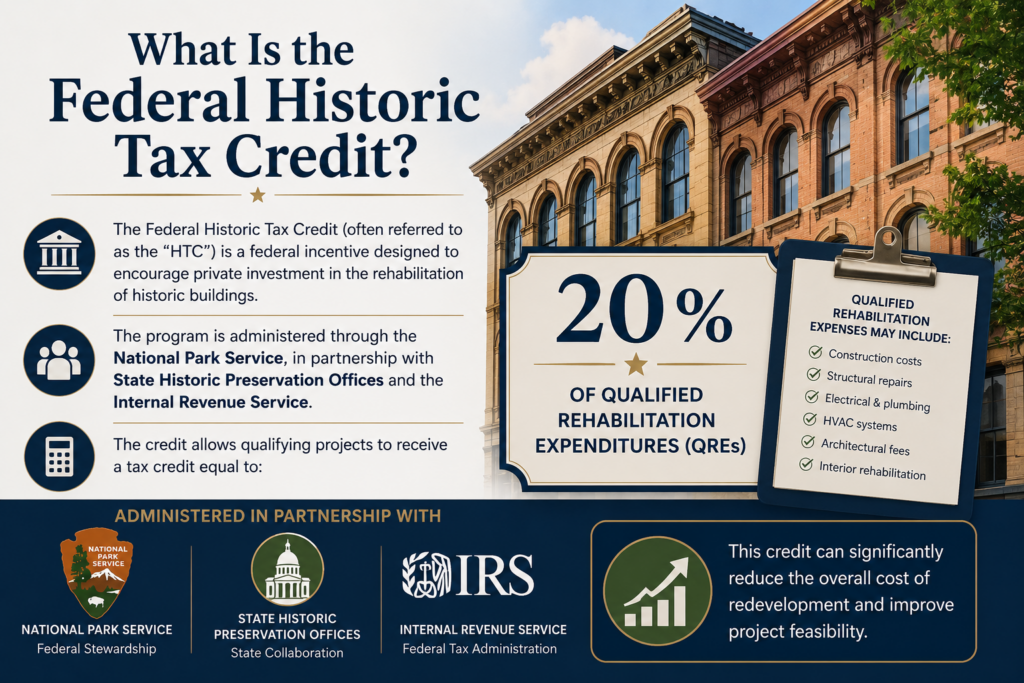
The Federal Historic Tax Credit (often referred to as the “HTC”) is a federal incentive designed to encourage private investment in the rehabilitation of historic buildings.
The program is administered through the National Park Service, in partnership with State Historic Preservation Offices and the Internal Revenue Service.
The credit allows qualifying projects to receive a tax credit equal to:
20% of Qualified Rehabilitation Expenditures (QREs)
This credit can significantly reduce the overall cost of redevelopment and improve project feasibility.
Why the Federal Historic Tax Credit Exists
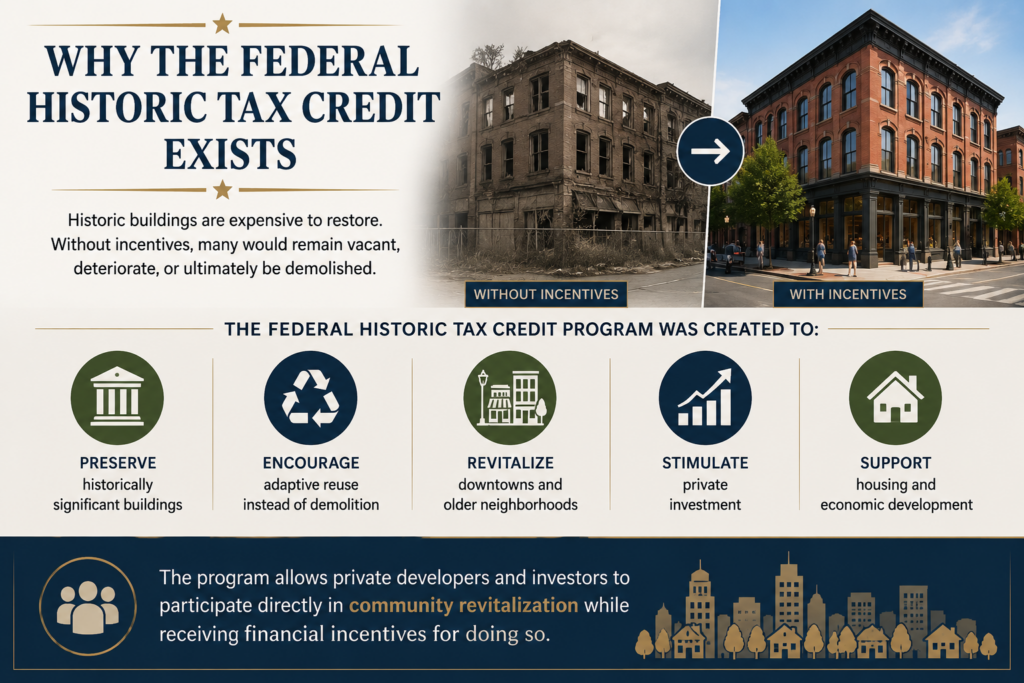
Historic buildings are expensive to restore. Without incentives, many would remain vacant, deteriorate, or ultimately be demolished.
The federal historic tax credit program was created to:
- Preserve historically significant buildings
- Encourage adaptive reuse instead of demolition
- Revitalize downtowns and older neighborhoods
- Stimulate private investment
- Support housing and economic development
The program allows private developers and investors to participate directly in community revitalization while receiving financial incentives for doing so.
How the Federal Historic Tax Credit Works
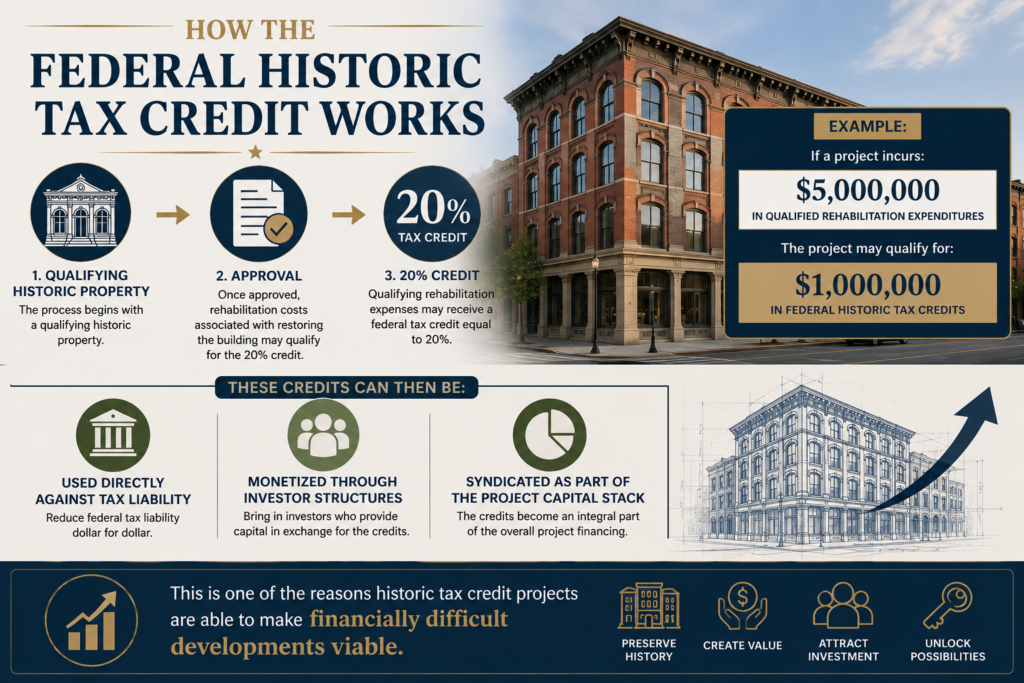
The process begins with a qualifying historic property.
Once approved, rehabilitation costs associated with restoring the building may qualify for the 20% credit.
Example:
If a project incurs:
- $5,000,000 in qualified rehabilitation expenditures
The project may qualify for:
- $1,000,000 in federal historic tax credits
These credits can then be:
- Used directly against tax liability
- Monetized through investor structures
- Syndicated as part of the project capital stack
This is one of the reasons historic tax credit projects are able to make financially difficult developments viable.
What Buildings Qualify?
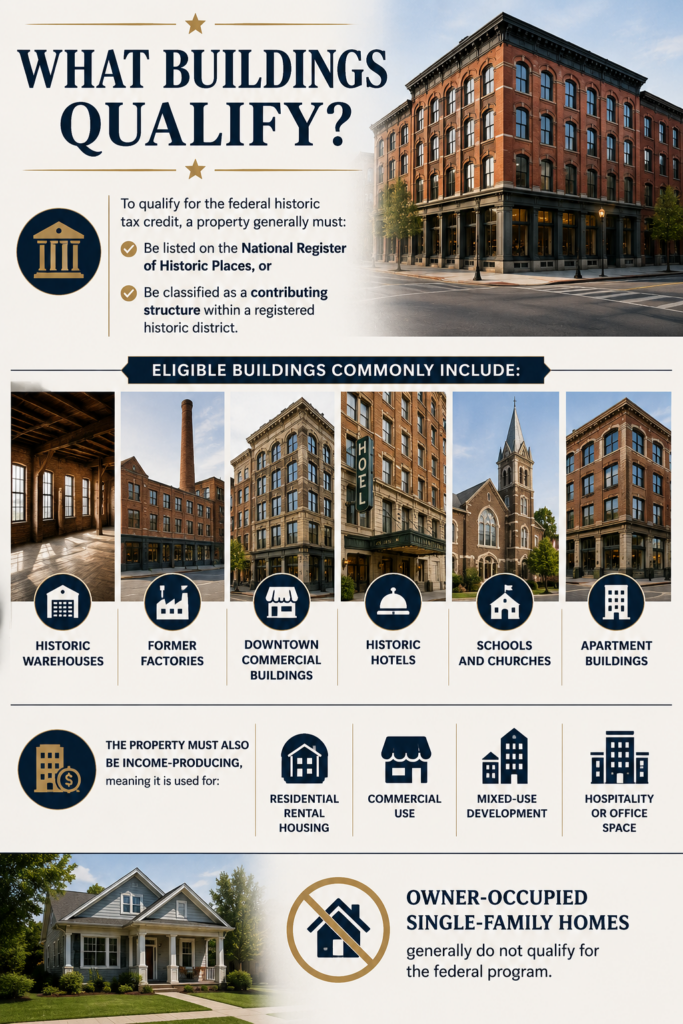
To qualify for the federal historic tax credit, a property generally must:
- Be listed on the National Register of Historic Places, or
- Be classified as a contributing structure within a registered historic district
Eligible buildings commonly include:
- Historic warehouses
- Former factories
- Downtown commercial buildings
- Historic hotels
- Schools and churches
- Apartment buildings
kropcmjhhkt@321mail.ru
The property must also be income-producing, meaning it is used for:
- Residential rental housing
- Commercial use
- Mixed-use development
- Hospitality or office space
Owner-occupied single-family homes generally do not qualify for the federal program.
What Are Qualified Rehabilitation Expenditures (QREs)?
Qualified Rehabilitation Expenditures, commonly referred to as “QREs,” are the rehabilitation expenses eligible for the credit.
Examples may include:
- Construction costs
- Structural repairs
- Electrical and plumbing systems
- HVAC systems
- Interior rehabilitation work
- Architectural and engineering fees
Certain expenses may not qualify, including:
- Building additions
- Landscaping
- Furnishings
- Acquisition costs
Understanding QREs is one of the most important parts of structuring a successful historic tax credit project.

The Three-Part Application Process
Federal historic tax credit projects typically go through a three-part approval process.
Part 1 – Historic Significance
Confirms that the building qualifies as a historic structure.
Part 2 – Rehabilitation Plan
Reviews proposed construction and rehabilitation plans to ensure compliance with preservation standards.
Part 3 – Request for Certification of Completed Work
Confirms that the completed rehabilitation meets the approved standards and qualifies for the credit.
This review process helps preserve the historic integrity of the building while allowing it to be adapted for modern use.
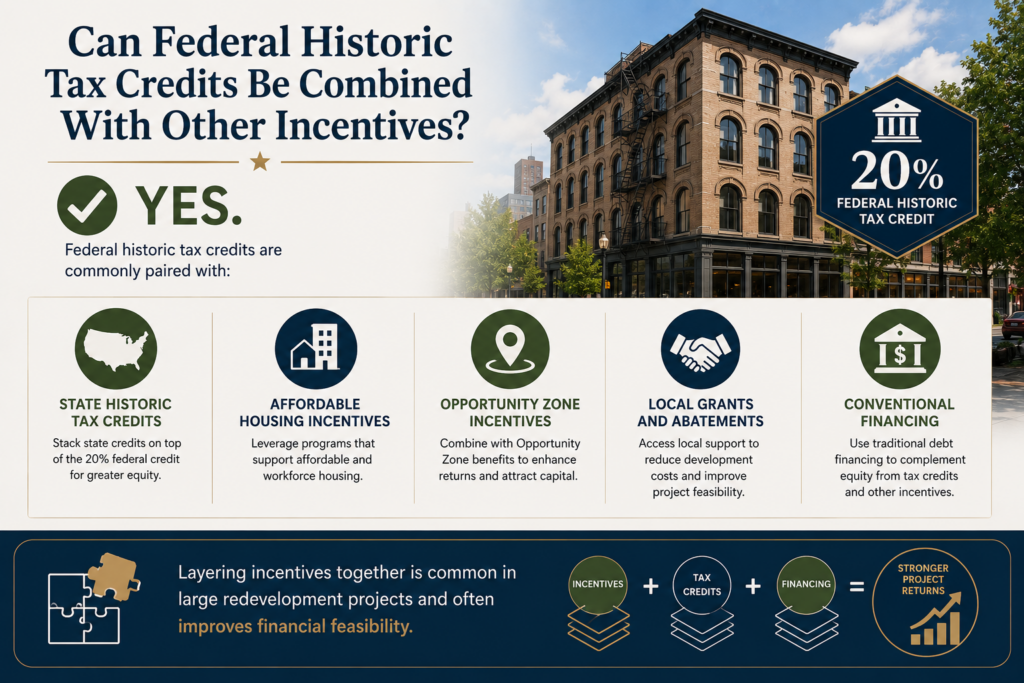
Can Federal Historic Tax Credits Be Combined With Other Incentives?
Yes.
Federal historic tax credits are commonly paired with:
- State historic tax credits
- Affordable housing incentives
- Opportunity Zone incentives
- Local grants and abatements
- Conventional financing
Layering incentives together is common in large redevelopment projects and often improves financial feasibility.
Historic Tax Credits and Housing Development
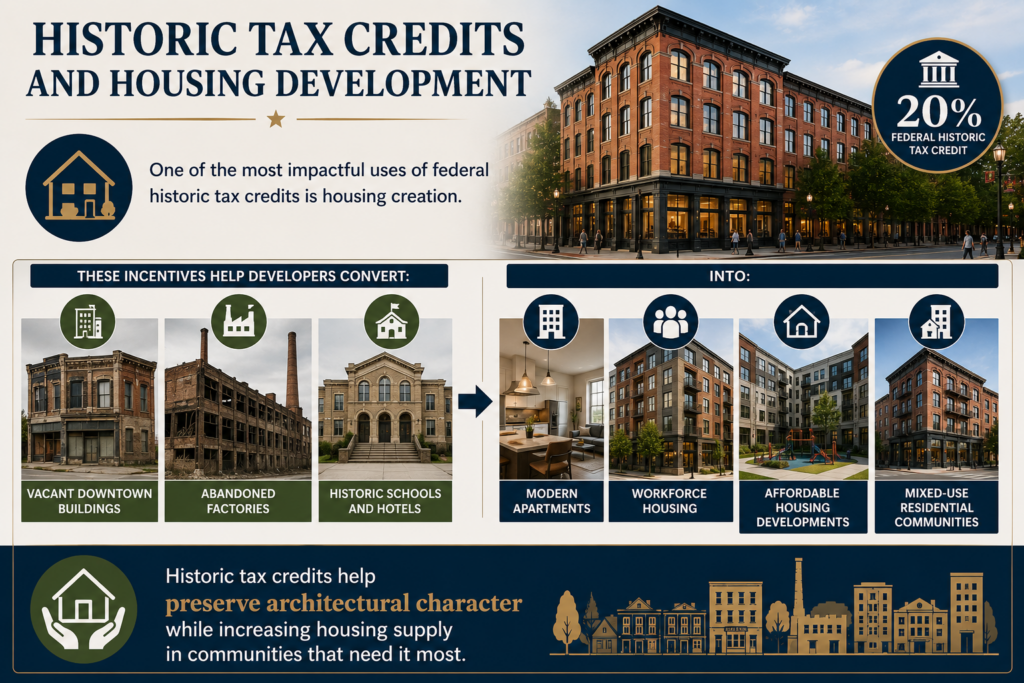
One of the most impactful uses of federal historic tax credits is housing creation.
These incentives help developers convert:
- Vacant downtown buildings
- Abandoned factories
- Historic schools and hotels
Into:
- Modern apartments
- Workforce housing
- Affordable housing developments
- Mixed-use residential communities
Historic tax credits help preserve architectural character while increasing housing supply in communities that need it most.
Common Misconceptions About Federal Historic Tax Credits
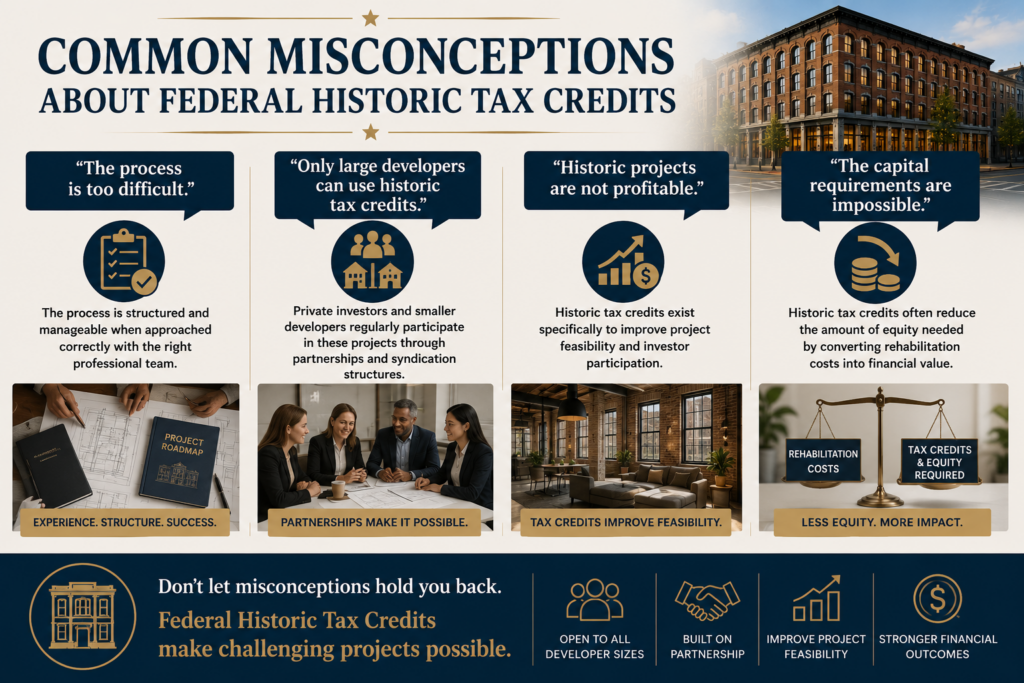
“The process is too difficult.”
The process is structured and manageable when approached correctly with the right professional team.
“Only large developers can use historic tax credits.”
Private investors and smaller developers regularly participate in these projects through partnerships and syndication structures.
“Historic projects are not profitable.”
Historic tax credits exist specifically to improve project feasibility and investor participation.
“The capital requirements are impossible.”
Historic tax credits often reduce the amount of equity needed by converting rehabilitation costs into financial value.
Why Federal Historic Tax Credits Matter
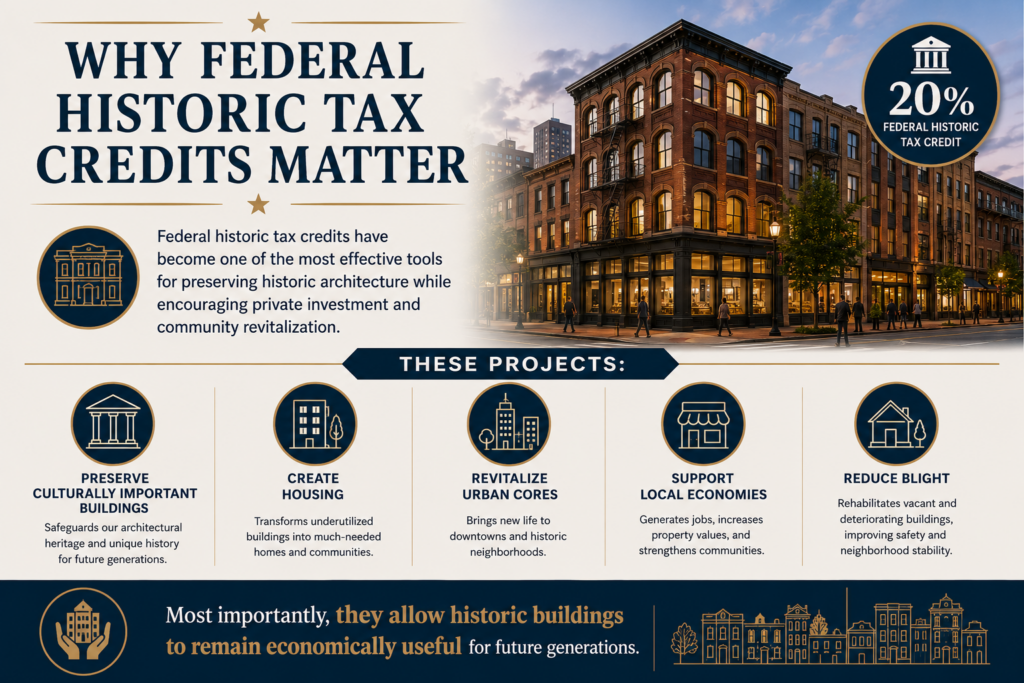
Federal historic tax credits have become one of the most effective tools for preserving historic architecture while encouraging private investment and community revitalization.
These projects:
- Preserve culturally important buildings
- Create housing
- Revitalize urban cores
- Support local economies
- Reduce blight
Most importantly, they allow historic buildings to remain economically useful for future generations.
Learn More About Historic Tax Credits
Understanding the federal historic tax credit is the first step toward understanding how historic redevelopment projects are structured and financed.
Whether you are:
- A developer
- Investor
- Property owner
- Or simply exploring the process
Historic tax credits can open the door to projects that combine profitability, preservation, and long-term community impact.